

In December 2019, UL published Design Guide 24480, which provides guidance on how to design lighting systems that support circadian entrainment. To learn more, I talked to Adam Lilien, Global Business Development Manager, Lighting, UL, LLC. The resulting interview informed an article I wrote for the May issue of ELECTRICAL CONTRACTOR.

Lighting Design
The Lighting Practice’s Evan Wilson Talks Photometrics
Because it’s impractical to mock up every design element in a project, lighting designers often rely on photometric reports and computer-generated renderings to predict the distribution and effects of light after lighting is installed. In this LinkedIn article, The Lighting Practice’s Evan Wilson explains what’s involved.

Stantec’s Sarah Dreger on How Lighting Designers Can Master Digital Technology
LD+A recently published an informative piece by Sarah Dreger, the global leader of Digital Practice for Stantec’s Buildings practice, about how lighting designers can efficiently stay up to date on current digital technology, from software and apps to VR and AR.
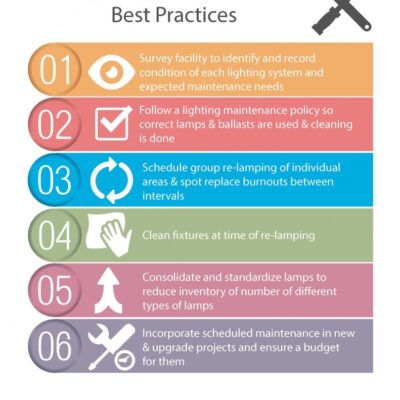
Lighting Maintenance Checklist
The Northwest Energy Efficiency Alliance recently published an infographic describing lighting maintenance best practices, which can help maintain the integrity of a new lighting design over the long term.

Light + Health, Lighting Design
Focal Point’s Mark D’Ambrosio on the WELL Building Standard
I recently had the opportunity to interview Mark D’Ambrosio, Senior Project Engineer – New Technology Strategy, Focal Point on the topic of how lighting fits into the WELL Building Standard. The interview informed an article I wrote for tED Magazine’s September 2019 issue. Here’s the transcript.
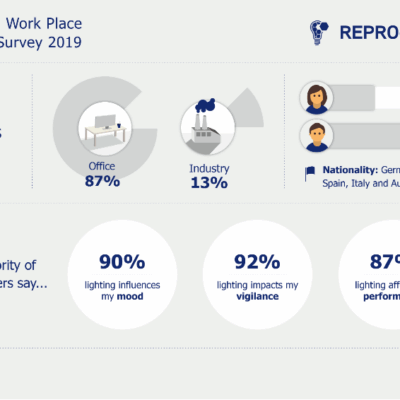
Survey: Majority of Europeans Want Better Workplace Lighting
Results from a pan-European survey reveal that current lighting in the workplace is not satisfying end-users and their needs, while at the same time it is regarded as an influence on productivity and human well being.

Focal Point’s Matthew Blakeley on Quantifying Lighting Quality (Part 2)
This is the second of a two-part article addressing advances in light sources and light quality, authored by Matthew Blakeley, Vice President – Product and Business Development for Focal Point as an exclusive contribution to LightNOW. This article highlights recent research, which provides a baseline definition of a quality light source that’s preferred by humans, independent of cultural background and familiarity with the habitual built environment.
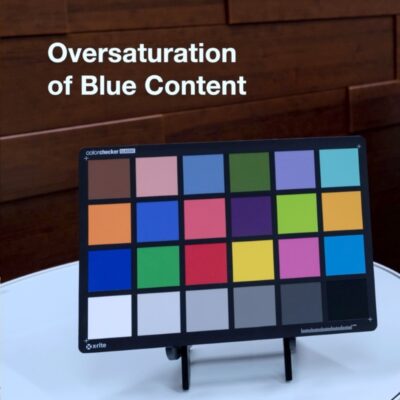
Focal Point’s Matthew Blakeley on Quantifying Lighting Quality (Part 1)
This is the first of a two-part article addressing advances in light sources and light quality, authored by Matthew Blakeley, Vice President – Product and Business Development for Focal Point as an exclusive contribution to LightNOW. This first article focuses on the evolution of light sources and measurement tools that can accurately describe the quality of the color rendition in a space.

Chris Cuttle Proposes New Approach to Design
In the Illuminating Engineering Society’s Forum for Illumination Research, Engineering, and Science, designer and educator Christopher (“Kit”) Cuttle, MA, PhD, FCIBSE, FIESANZ, FIESNA, FSLL, proposed a new approach to lighting design that integrates illumination factors beyond workplane light levels.
Craig’s Lighting Articles, Lighting Design
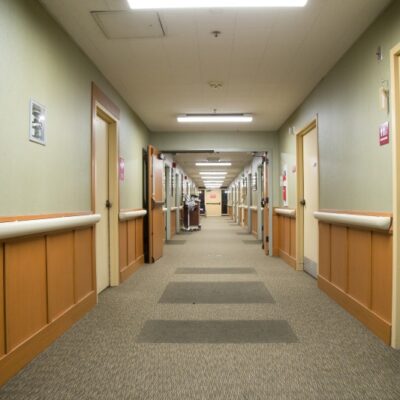
Lighting for Senior Facilities
Nearly 50 million people aged 65 and over live in the United States, with about 1 million living in more than 30,000 assisted-living communities, according to the National Center for Assisted Living. They can be challenging for lighting design, as the visual system undergoes physiological changes with age that can reduce visual acuity and color discrimination while heightening sensitivity to glare.



Lighting Solution Development
7889 River Hill Lane, Alexandria, PA 16611-2604