

New research suggests that light’s effects on sleep and circadian timing depend on the full 24-hour light environment, not just “morning light good, evening light bad.” Using a mathematical model, researchers showed that brighter daytime exposure can make the body more resilient to disruptive evening light, and they generated testable predictions about when light [...]

Research
Products + Technology, Research
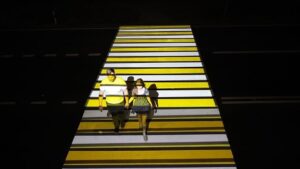
Projected Road Markings Tested In Belarus
Projected road markings are being tested on the P-83 highway leading to Belavezhskaya Pushcha in Belarus, where Brestavtodor has installed a projection-based pedestrian crossing intended to improve nighttime visibility and driver awareness. Belarus is testing this new traffic-safety concept on the highway to Belavezhskaya Pushcha, introducing projected road markings as part of a broader [...]
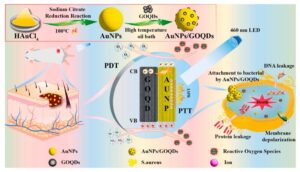
Blue Light & Gold/Graphene Nanocomposite Heals Wounds Faster
Researchers in China report a light-activated nanocomposite that could tackle infected wounds on three fronts at once: kill bacteria, help clear the wound, and support tissue repair. In lab and mouse tests, the gold nanoparticle/graphene oxide quantum dot system plus blue LED light eradicated about 97% of bacteria and drove nearly 99% wound healing [...]

Circadian Disruption Impacts Pregnant Mothers & Fetuses
A 2022 study “Evening blue‐light exposure, maternal glucose, and infant birthweight” investigated whether exposure to blue‐enriched light in the evening during late pregnancy is linked to maternal fasting glucose levels and infant birthweight. The rationale builds on evidence that circadian disruption, melatonin suppression, and altered sleep from nighttime light exposure can influence metabolic regulation, [...]
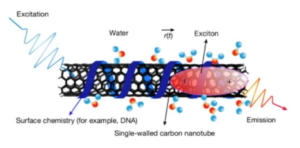
Light Shown To Create Quantum Friction
A research team in Germany and India have reported a new experiment showing that light can slow down the diffusion of carbon nanotubes suspended in water by creating an unexpected kind of “quantum friction.” The effect is stronger when more light is applied, and the work was published last month, in Nature. Researchers shined light on carbon [...]
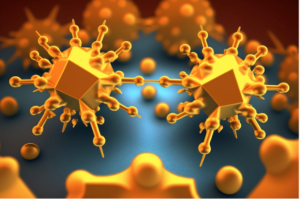
Researchers Prove New Path To NIR Emitters
Scientists at the University of Cambridge have achieved what was once considered impossible by electrically powering insulating nanoparticles to create a completely new kind of LED. Using tiny organic “molecular antennas,” the team found a way to funnel energy into materials that normally cannot conduct electricity, producing ultra pure near infrared light with remarkable [...]
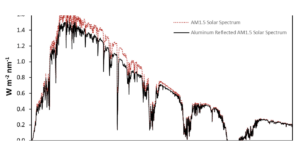
Photobiological Hazard Assessment Of Orbital Solar Reflectors
By Eric Bretschneider, Ph.D Excerpts from a larger technical report, linked below. Executive Summary This report details a photobiological hazard assessment of the general concept of Orbital Solar Reflectors (OSRs). A recent proposal, Reflect Orbital’s proposed Earendil-1 satellite is used as an exemplar. The analysis was conducted following IEC 62471:2006 Photobiological Safety of Lamps and [...]
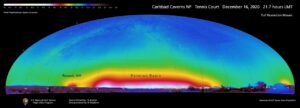
Evaluating Near-Horizontal Light Emission from Outdoor Lighting
By Brian Liebel & Rick Utting, DarkSky International, Tucson, AZ. Executive Summary Upward-emitted outdoor light has long been identified as a source of atmospheric light pollution, a.k.a. sky glow. This form of light pollution is an obvious contributor to the brightening of the nighttime sky and can be observed as glowing domes of light [...]
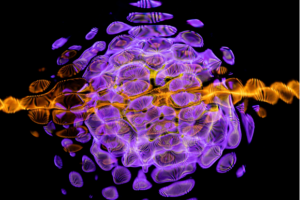
Quantum Biology, Light, & Living Organisms
What Is Quantum Biology? Quantum biology is an emerging scientific field that studies the role of quantum mechanics—the physics of particles at the atomic and subatomic levels—in living organisms. It explores how biological processes rely on phenomena like quantum tunneling and coherence, rather than just classical physics and standard chemistry. Researchers focus on a variety of [...]
Energy + Environment, Research
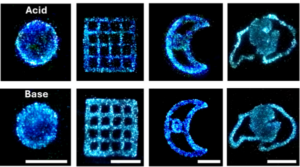
Bioluminescent Algae Creates Non-Electric Lighting
Researchers at CU Boulder have developed a way to make living algae emit light for much longer than the tiny flashes seen in nature, opening the door to electricity-free lighting and other “living material” applications. The team used simple chemical solutions to trigger sustained bioluminescence in Pyrocystis lunula, an algae embedded in 3D-printable hydrogel [...]



Lighting Solution Development
7889 River Hill Lane, Alexandria, PA 16611-2604